On the Ground

Where Every
Tree Stands

Six ecosystems. Six communities. Every tree registered within 24 hours of planting — with GPS coordinates, species name, custodian identity, and a public survival record.

13,700 trees registered
6 active ecosystems
87% avg. survival rate
214 named custodians
A degraded hillside. Now a watershed. — Western Ghats, Maharashtra
Watershed Restoration Active
91% survival
Western Ghats, Maharashtra
March 2024

A degraded hillside. Now a watershed.

2,500 trees
12 ha
14 native species

Twelve hectares of eroded hillside in Nashik district had lost 70% of its native tree cover to charcoal extraction. Runoff was destroying downstream paddy fields belonging to 340 farming families. We planted 2,500 trees across 14 native species — Teak for timber, Bamboo for rapid canopy, Wild Fig for soil anchoring. Month 14 survival rate: 91%. The stream that ran dry in April 2023 ran through June 2024.

340 families downstream water security restored
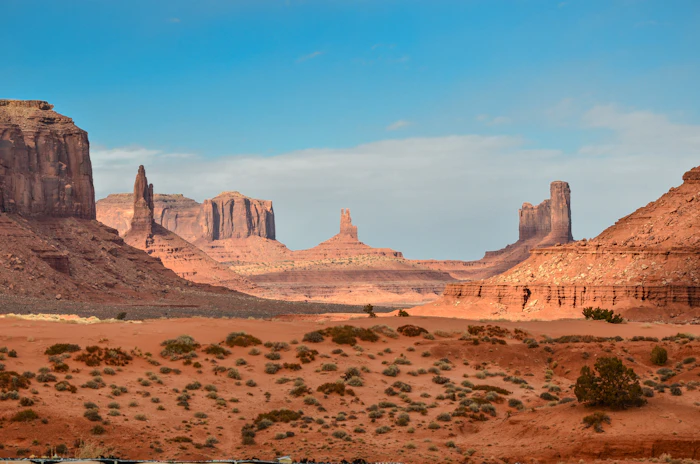
Stopping the desert, tree by tree. — Aravalli Range, Rajasthan
Dryland Restoration Active
84% survival
Aravalli Range, Rajasthan
July 2024

Stopping the desert, tree by tree.

1,800 trees
9 ha
8 drought-resistant species

The Aravalli range loses 1,200 sq km to desertification every decade. In Barmer district, we partnered with 120 pastoral families whose grazing lands had turned to dust. Using only species that evolved in these soils — Khejri, Rohida, Aak — our custodians planted 1,800 trees across 9 hectares. At 18 months, 84% have survived conditions that kill most plantation saplings. Ground temperature under canopy is already 4°C lower.

4°C cooler ground temperature under canopy at 18 months
Mangroves that keep villages standing. — Sundarbans Buffer Zone, West Bengal
Coastal Mangroves Active
88% survival
Sundarbans Buffer Zone, West Bengal
November 2024

Mangroves that keep villages standing.

3,200 trees
8 ha
11 mangrove species

Cyclone Amphan (2020) destroyed 23 km of Sundarbans mangrove buffer in South 24 Parganas, exposing 580 fishing families to direct tidal surge. We planted 3,200 mangrove saplings across 8 hectares of buffer zone, prioritising the five fastest-canopy-forming species. At 6 months, the planted corridor is already reducing wave height by an estimated 30–40% during storm surges. These trees are not decoration. They are infrastructure.

580 families protected from tidal surge behind restored buffer
Restoring a biosphere that feeds 50 rivers. — Nilgiris Biosphere, Tamil Nadu
High-Altitude Forest Active
89% survival
Nilgiris Biosphere, Tamil Nadu
January 2025

Restoring a biosphere that feeds 50 rivers.

4,100 trees
18 ha
22 endemic Shola species

The Nilgiris Shola-grassland mosaic is one of the most biodiverse ecosystems on Earth — and one of the most threatened. Invasive wattle and eucalyptus plantations have displaced endemic Shola forest across 40% of the biosphere. Our 4,100-tree project across 18 hectares uses 22 endemic species exclusively. The Shola feeds the headwaters of 50 rivers — including the Cauvery. Every tree here is not just a tree. It is a tributary.

50 rivers fed by Nilgiris headwaters this project protects
Trees that feed families while they grow. — Palghar District, Maharashtra
Agroforestry Active
93% survival
Palghar District, Maharashtra
April 2025

Trees that feed families while they grow.

1,200 trees
6 ha
9 food-bearing native species

In Palghar's tribal belt, land degradation and food insecurity are inseparable. We worked with 74 Warli farming families to integrate 1,200 food-bearing native trees into their degraded plots — Amla for vitamin C, Drumstick for year-round nutrition, Jackfruit as a complete protein source. The design is deliberate: these families don't just monitor trees. They harvest them. Ownership is not a concept — it is a meal.

74 Warli families earning food security from their custodian trees
Where every tree holds a slope together. — Uttarakhand Himalayan Belt
Himalayan Restoration Upcoming
Uttarakhand Himalayan Belt
June 2025

Where every tree holds a slope together.

900 trees
5 ha
7 high-altitude species

Slope destabilisation in the Chamoli district has accelerated since 2013 — each monsoon triggers more landslides across deforested ridgelines. Our 900-tree project targets the most vulnerable 5 hectares: Banj Oak to restore soil moisture, Deodar as a structural anchor, Burans for canopy and understorey. High-altitude planting requires specialised timing and species knowledge. Our regional coordinators in Uttarakhand have spent three years mapping exactly where each species should go.

5 hectares of high-risk landslide slope being stabilised
Expanding Network

Next regions: Kerala, Odisha, Gujarat

Site assessments are underway in three new states. Each location is selected based on ecological need, community readiness, and custodian availability — not just geography.

Phase 2

targeting 25,000 additional trees across 10 new districts

Join a Future Project
How We Verify

Every number on this page
has a name behind it.

Day 1

GPS coordinates, geotagged photo, species name, and custodian identity submitted within 24 hours of planting.

Every 90 days

Each custodian submits a growth update — height, health photo, observations. Five minutes per check-in.

Annual field visit

Our regional coordinator visits in person. Growth is measured independently. Survival status is verified, not self-reported.

The survival rates shown above are calculated from independent field verification data, not from custodian self-reports. When we say 91%, we mean 91 out of every 100 trees, measured by someone other than the person who planted it.

Your Region, Your Project

The forest doesn't stop
at six projects.

If you have land, a community, or a pocket of degraded earth that needs trees — we have the framework, the verification system, and the regional coordinators to make it real.

Every project on this page started with one person who saw a problem and decided to be accountable for fixing it.

Plant a Tree WhatsApp Us

🎨 Asset Slots